
Hepcidin, a small peptide hormone produced by the liver, plays a critical role in regulating iron levels in the body. By controlling the absorption, distribution, and storage of iron, hepcidin maintains iron homeostasis, making it a central player in iron-related disorders like anemia, iron overload, and inflammation. The Human Hepcidin ELISA is a sensitive and specific assay used to measure hepcidin levels in biological samples, such as serum and plasma, aiding research in various fields including hematology, nephrology, and gastroenterology.
The Role of Hepcidin in Iron Regulation
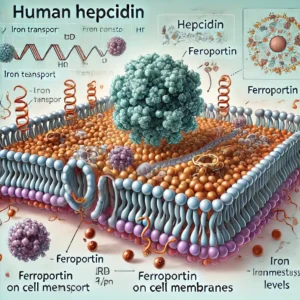
Hepcidin’s primary function is to regulate iron by binding to ferroportin, a transmembrane protein responsible for exporting iron from cells into the bloodstream. Upon binding, hepcidin induces the degradation of ferroportin, limiting iron availability. This mechanism is critical in conditions like anemia of chronic disease and hereditary hemochromatosis, as discussed in NIH’s iron metabolism studies. Additionally, the regulation of hepcidin is influenced by inflammation, infection, and iron stores, as reviewed in FDA research.
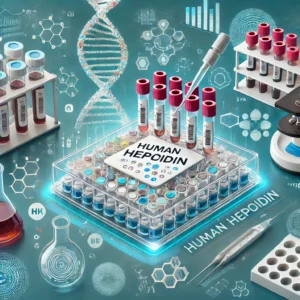
Features of the Human Hepcidin ELISA
- High Sensitivity and Specificity: The Human Hepcidin ELISA can detect low levels of hepcidin, making it useful in both clinical and research settings. This sensitivity is crucial for accurately diagnosing iron metabolism disorders, as described in NIH’s research.
- Rapid Detection: The ELISA format enables rapid detection of hepcidin, allowing researchers to analyze multiple samples efficiently. The rapid detection is vital for clinical studies where quick turnaround times are essential, as highlighted by FDA guidelines.
- Application in Various Biological Fluids: The assay can be used on serum, plasma, and urine samples, providing flexibility for different types of studies. For more information on sample handling, see CDC’s laboratory protocols.
Applications of the Human Hepcidin ELISA
- Iron Deficiency Anemia: Hepcidin is a crucial biomarker in diagnosing iron deficiency anemia, especially in cases complicated by chronic disease. By measuring hepcidin levels, researchers can better understand how iron is regulated in the body during inflammatory conditions like rheumatoid arthritis and chronic kidney disease, as explored in NIH studies.
- Hemochromatosis and Iron Overload Disorders: Elevated hepcidin levels can indicate iron overload disorders, such as hereditary hemochromatosis, where excess iron causes damage to organs like the liver and heart. Research on iron overload and its link to hepcidin is covered extensively by CDC.
- Anemia of Chronic Disease: In conditions like chronic inflammation or infection, hepcidin levels are often dysregulated, leading to anemia of chronic disease (ACD). By monitoring hepcidin levels, clinicians can distinguish between ACD and iron deficiency anemia, as discussed in FDA’s clinical research.
How the Human Hepcidin ELISA Works
The sandwich ELISA method is used to quantify hepcidin levels. The steps include:
- Capture Antibody: The wells are coated with an antibody specific to hepcidin.
- Sample Addition: Biological samples containing hepcidin are added, allowing the hormone to bind to the capture antibody.
- Detection Antibody: A detection antibody is added to recognize the bound hepcidin, producing a colorimetric change.
- Quantification: The intensity of the color change correlates with the concentration of hepcidin in the sample, which can be measured using a microplate reader.
For detailed protocols, visit NIH’s ELISA resources.

Sample Types and Preparation
- Serum and Plasma: These sample types are typically used for hepcidin measurement. Proper collection, handling, and storage of serum and plasma are critical for accurate results, as outlined by FDA’s clinical guidelines.
- Urine Samples: In certain studies, hepcidin levels can also be measured in urine. This method offers a non-invasive alternative for monitoring iron metabolism, as described in NIH research.
Key Benefits of the Human Hepcidin ELISA
- High Accuracy: The assay delivers precise results with minimal cross-reactivity, ensuring that only hepcidin is detected, even in complex biological samples. For more on assay validation, consult FDA’s assay standards.
- Reproducibility: The Human Hepcidin ELISA provides reproducible results across different labs and sample types, making it a reliable tool for longitudinal studies. More information on assay reproducibility is available on NIH.
Conclusion
The Human Hepcidin ELISA is an essential tool for researchers and clinicians investigating iron homeostasis, anemia, and iron overload disorders. By offering high sensitivity, specificity, and reproducibility, this assay enables scientists to gain valuable insights into hepcidin’s role in disease progression and treatment. For further information on hepcidin-related research, visit resources from NIH, FDA, and CDC.
This ELISA kit has paved the way for advancements in diagnosing and treating iron-related disorders, helping researchers uncover the molecular mechanisms behind iron metabolism.